Showing posts with label UK. Show all posts

Monday, March 17, 2014

Chicken pox? Chicken pox!

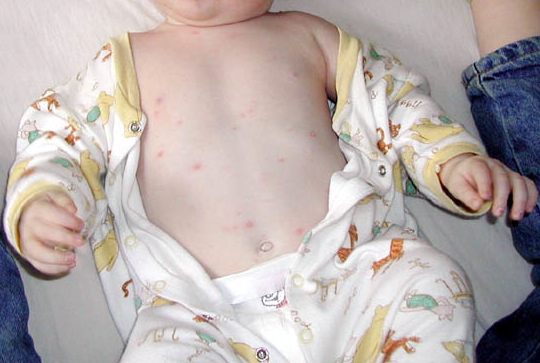
There are still parents who, although generally vaccinating, question the need for a chicken pox vaccine. They do think of chicken pox as a harmful rite of passage, a handful of pox, crusted over in a few days - about as "dramatic" as in this child:

Windpocken

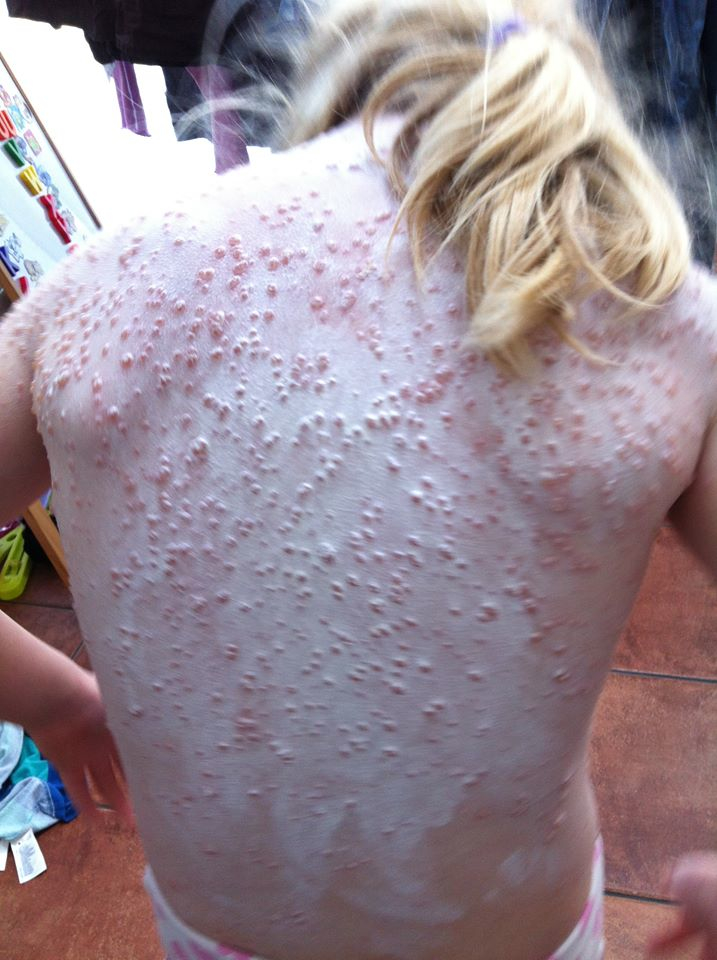
the benefit is assumed to be life long immunity (which it is, for about 90% of patients). Problem is - these are chicken pox, too:

 auchWindpocken

Hundreds of lesions, the entire back covered, incredibly painful, the infection so severe that the child had to be committed to the hospital, like 2000 of her peers in pre-vaccine Germany per year, on average for 5 days, 77% without pre-existing conditions. Chicken pox cases neurological complications (25.4% of hospitalisations), skin infections (23.2%) and gastrointestinal complications (15%), indeed, pox can be internal as well. About 20 per year died.

There is nothing to predict whether your child will be in the top group - "chicken pox? What's the fuss about?", or in the bottom group "chicken pox?! Looks like small pox to me!".  

That is why vaccination is worth it!

Tuesday, September 25, 2012

Buy this Book Before Big Bad Pharma has it Pulled off the market

Here's Ben Goldacre holding the first copy of his new book "Bad Pharma" (I will hold mine tonight, squee):


Those of you who have followed the story of "Bad Science" will know that the first edition was missing a chapter, because the dangerous quack discussed in that story was suing Dr. Goldacre. The chapter appeared online after the law suit and was added to the second edition of the book.

Now Ben might be facetious when he asks his readers to buy the book before it gets pulled, but it is not an unrealistic worry given his previous experience and industry practise. What can you expect? Luckily, Ben Goldacre generously shares the whole Introduction here:
So to be clear, this whole book is about meticulously defending every assertion in the paragraph that follows.
Drugs are tested by the people who manufacture them, in poorly designed trials, on hopelessly small numbers of weird, unrepresentative patients, and analysed using techniques which are flawed by design, in such a way that they exaggerate the benefits of treatments. Unsurprisingly, these trials tend to produce results that favour the manufacturer. When trials throw up results that companies doesn’t like, they are perfectly entitled to hide them from doctors and patients, so we only ever see a distorted picture of any drug’s true effects. Regulators see most of the trial data, but only from early on in its life, and even then they don’t give this data to doctors or patients, or even to other parts of government. This distorted evidence is then communicated and applied in a distorted fashion. In their forty years of practice after leaving medical school, doctors hear about what works through ad hoc oral traditions, from sales reps, colleagues or journals. But those colleagues can be in the pay of drug companies – often undisclosed – and the journals are too. And so are the patient groups. And finally, academic papers, which everyone thinks of as objective, are often covertly planned and written by people who work directly for the companies, without disclosure. Sometimes whole academic journals are even owned outright by one drug company. Aside from all this, for several of the most important and enduring problems in medicine, we have no idea what the best treatment is, because it’s not in anyone’s financial interest to conduct any trials at all. These are ongoing problems, and although people have claimed to fix many of them, for the most part, they have failed; so all these problems persist, but worse than ever, because now people can pretend that everything is fine after all.
In short - the book that everyone should read and that could be the beginning of something amazingly beautiful: evidence-based medicine.

For those of you in the US - ask a European friend to send you the book or bridge the time until January 2013 with reading Ben's excellent blog.

NOTE: I linked to Amazon.co.uk and Amazon.com up there, but if you have a chance, support your local book store and buy it there.

Edited to add: David Colquhoun, the excellent pharmacologist and skeptic has weighed in. I have changed the book link to a store which pays taxes in the UK following his example.

Thursday, September 13, 2012

Chicken pox vaccination policy in the UK - did it cost Elana's life?

The UK is often cited in discussions about the chicken pox vaccine. After all, they are a perfectly developed country, they even speak (vaguely) the same language as the US and the NHS's chicken pox policy spells out what (US) vaccine critics have known all along: the disease is harmless in children and vaccinating against it will increase the incidence of shingles in the older population.
The chickenpox vaccine is not part of the UK childhood vaccination programme, because experts think that introducing a chickenpox vaccination for children could increase the risk of shingles in older people. ...
Chickenpox is usually a mild illness, particularly in children. 
This view has been repeatedly challenged. The BBC claimed cost as one major reason the NHS doesn't provide the varicella vaccine and cited Dr David Elliman, immunisation expert at the the Royal College of Paediatrics and Child Health (RCPCH), stating that MMR fears need to be overcome in the UK before a further live viral vaccine could be successfully introduced (more suffering due to the Wakefield/MMR/autism manufactuversy):
"The chickenpox vaccine is definitely desirable, and I think it it will happen, but unfortunately I don't think we are ready for the debate yet - not until we get MMR rates back where they need to be. We need to win that one first."
This is particularly cynical since more patients are dying of chicken pox in England and Wales every year than from pertussis, mumps, measles and hib combined.
Mortality from chickenpox is not negligible. During
1995/­7, 81 deaths were recorded by the Office for
National Statistics. However, we received 119 certifi-­
cates that mentioned chickenpox or varicella. After
detailed inquiries, we estimated that at least 75 were
genuine cases of chickenpox. This suggests at least 25
deaths from chickenpox annually. In 1996/­7 there were
seven certified deaths from whooping cough, mumps,
measles, and Haemophilus influenzae type b (Hib) men-­
ingitis in England and Wales compared with 67 from
chickenpox.
In the meantime, children are either protected by a varicella vaccine purchased privately from a travel clinic (if parents are 1. aware of the option and 2. tenacious enough to find a clinic 3. well off enough to afford this), or they have to suffer through chicken pox. Elana had to have chicken pox and while her brother, who had them first, had a mild case, Elana developed pox in her lungs and died. Just like that:
Elana was three years old when she came out in spots on Easter Sunday 2009. She was fit and healthy and, as her brother had fended off a fairly mild dose of chickenpox the week before, I wasn’t worried. What was to follow has changed my family’s lives forever.
That evening, Elana was a bit tired and wanted to curl up in front of the television but she didn’t seem particularly ill – her spots were not even particularly itchy. But as the week progressed, she seemed to get more lethargic and her condition worsened.
By Thursday, the spots had started to crust over and I thought she should have been getting better but there was no improvement. On Friday night I called the emergency GP and went to a community health centre to have her looked at. The doctor diagnosed Elana with possible pneumonia and recommended that we take her straight to the hospital.
By 11pm on the Friday night we were in hospital and Elana was very unwell. At 6.04am on Saturday morning she suffered a cardiac arrest. Elana was pronounced dead at 7am.
The UK Department of Health touted the party line:
We wrote to the UK government but the Department of Health says severe cases of chickenpox infection are rare and occur mostly in immuno-compromised children. However, I can say from witnessing it first-hand that my daughter was fit and healthy before she picked up the virus. In fact, Elana only ever needed to see a doctor when she was having routine immunisations. I know some other parents who have had the same experience.  
Elana's mum is now spreading awareness of the potential dangers of chicken pox and the availability of the vaccine. It is striking that in the UK, the vaccine is such a well-kept secret that even she, as a nurse, was not aware of it. So: help her - don't let the death of her precious daughter have been wasted. Talk about the vaccine as a real option, tell your neighbours, your GP, your MP, post it on Mumsnet and other fora.