Showing posts with label vaccination. Show all posts

Wednesday, June 11, 2014

KISS 11 June 2014: Vaccination protects from severe pertussis

An ongoing outbreak of pertussis in Oregon, spanning from 2010 to 2012 and 624 cases, offered the exceptional opportunity to analyse disease severity. Vaccination history, treatment, demographic, and outcome information was available for almost all (98.7%) of the patients, of which 45% were up to date with currently recommended vaccinations. The paper finds:
Ever-vaccinated cases were significantly less likely to be hospitalized or develop severe illness (adjusted odds ratio [aOR], 0.2; 95% confidence interval [CI], .1-.8 and aOR, 0.4; 95% CI, .2-.9, respectively). ACIP up-to-date patients stopped coughing significantly more rapidly than unvaccinated patients (adjusted hazard ratio, 1.7; 95% CI, 1.3-2.2). [my bold]
 Read more here.

Monday, March 17, 2014

Chicken pox? Chicken pox!

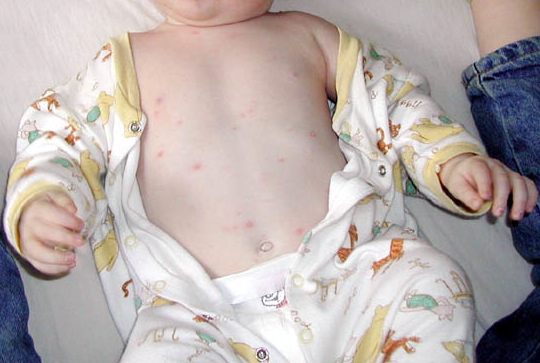
There are still parents who, although generally vaccinating, question the need for a chicken pox vaccine. They do think of chicken pox as a harmful rite of passage, a handful of pox, crusted over in a few days - about as "dramatic" as in this child:

Windpocken

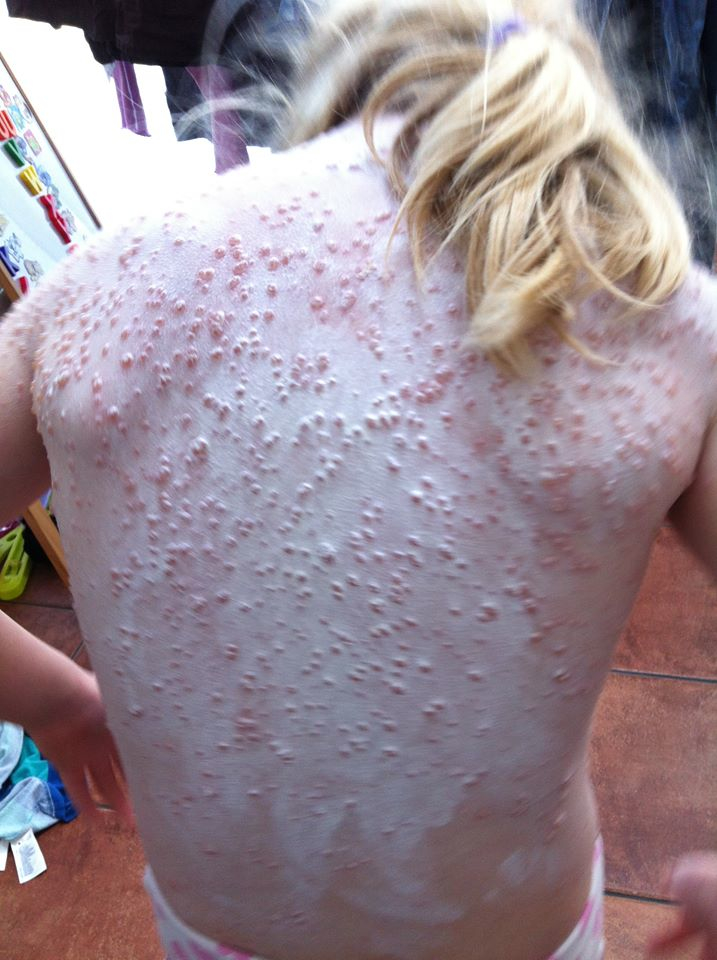
the benefit is assumed to be life long immunity (which it is, for about 90% of patients). Problem is - these are chicken pox, too:

 auchWindpocken

Hundreds of lesions, the entire back covered, incredibly painful, the infection so severe that the child had to be committed to the hospital, like 2000 of her peers in pre-vaccine Germany per year, on average for 5 days, 77% without pre-existing conditions. Chicken pox cases neurological complications (25.4% of hospitalisations), skin infections (23.2%) and gastrointestinal complications (15%), indeed, pox can be internal as well. About 20 per year died.

There is nothing to predict whether your child will be in the top group - "chicken pox? What's the fuss about?", or in the bottom group "chicken pox?! Looks like small pox to me!".  

That is why vaccination is worth it!

Friday, March 7, 2014

75 studies that show no link between vaccines and autism UPDATED to 107

Edited to fix links and to add more studies for a new total of 107 on 11 March 2014

Guest blog, compiled by Allison Hagood, Luci Baldwin, Kathy McGrath and Nathan Boonstra and originally published on the "Your Baby's Best Shot" Facebook page. I am grateful for the permission to repost!

If anyone still tries to pull the "vaccines cause autism" card on you, provide them with a link to this note!

Albizzati, A., Moré, L., Di Candia, D., Saccani, M., Lenti, C.  Normal concentrations of heavy metals in autistic spectrum disorders.  Minerva Pediatrica.  2012. Feb;64(1):27-31 http://www.ncbi.nlm.nih.gov/pubmed/22350041

Afzal, MA., Ozoemena, LC., O’Hare, A., Kidger, KA., Bentley, ML., Minor, PD. Absence of detectable measles virus genome sequence in blood of autistic children who have had their MMR vaccination during the routine childhood immunization schedule of UK.   Journal Medical Virology.  2006 May;78(5):623-30.  http://www.ncbi.nlm.nih.gov/pubmed/16555271

Ahearn WH. What Every Behavior Analyst Should Know About the "MMR Causes Autism" HypothesisArchive of Behavior Analysis in Practice.  2010.   Spring;3(1):46-50. http://www.ncbi.nlm.nih.gov/pubmed/22479671

Allan, GM., Ivers, N.  The autism-vaccine story: fiction and deception?  Canadian Family Physician.  Oct 2010; 56(10): 1013. http://www.ncbi.nlm.nih.gov/pmc/articles/PMC2954080/

Andrews, N., Miller, E., Grant, A., Stowe, J., Osborn, V., & Taylor, B. (2004).  Thimerosal exposure in infants and developmental disorders: a retrospective cohort study in the United Kingdom does not support a causal association.  Pediatrics, 114, 584-591. http://www.ncbi.nlm.nih.gov/pubmed/15342825 

Andrews, N., Miller, E., Taylor, B., Lingam, R., Simmons, A., Stowe, J., Waight, P.  Recall bias, MMR and autism.  Archives of Disease in Childhood.  Dec 2002; 87(6): 493–494.  http://www.ncbi.nlm.nih.gov/pmc/articles/PMC1755823/pdf/v087p00493.pdf

Baird, G., Pickles, A., Simonoff, E., Charman, T., Sullivan, P., Chandler, S., Loucas, T., Meldrum, D., Afzal, M., Thomas, B., Jin, L., Brown, D.  Measles vaccination and antibody response in autism spectrum disorders.  Archives of Disease in Childhood.  2008 Oct;93(10):832-7. doi: 10.1136/adc.2007.122937. Epub 2008 Feb 5.  http://www.ncbi.nlm.nih.gov/pubmed/18252754

Berger, BE., Navar-Boggan, AM., Omer, SB.  Congenital rubella syndrome and autism spectrum disorder prevented by rubella vaccination--United States, 2001-2010.   BMC Public Health.  2011 May 19;11:340. doi: 10.1186/1471-2458-11-340. http://www.ncbi.nlm.nih.gov/pubmed/21592401

Black, C., Kaye, JA.  Relation of childhood gastrointestinal disorders to autism:  nested case-control study using data from the UK General Practice Research Database.  British Medical Journal.  2002; 325(7361):419-21.  http://dx.doi.org/10.1136/bmj.325.7361.419

Bower, H.  New research demolishes link between MMR vaccine and autism.  British Medical Journal.  1999.  Jun 19;318(7199):1643. http://www.ncbi.nlm.nih.gov/pmc/articles/PMC1116011/

Chen, W., Landau, S., Sham, P., & Fombonne, E. (2004).  No evidence for links between autism, MMR and measles virus.  Psychological Medicine, 34(3), 543-553. http://www.ncbi.nlm.nih.gov/pubmed/15259839

Christie, B.  Scottish expert group finds no link between MMR and autism.  British Medical Journal,  2002. May 11;324(7346):1118. http://www.ncbi.nlm.nih.gov/pmc/articles/PMC1172158/

Clements, CJ., McIntyre, PB.  When science is not enough – a risk/benefit profile of thiomersal-containing vaccines.   Expert Drug Opinion Safety.  2006. Jan;5(1):17-29. http://www.ncbi.nlm.nih.gov/pubmed/16370953    

Dales, L., Hammer, S. J., & Smith, N. J. (2001). Time trends in autism and in MMR immunization coverage in California.   JAMA, 285(9), 1183-1185. http://www.ncbi.nlm.nih.gov/pubmed/11231748

De Los Reyes, EC.  Autism and immunizations: separating fact from fiction.  JAMA Neurology.   2010;67(4):490-492. doi:10.1001/archneurol.2010.57. http://archneur.jamanetwork.com/article.aspx?articleid=799645

DeWilde, S., Carey, IM., Richards, N., Hilton, SR., Cook, DG.  Do children who become autistic consult more often after MMR vaccination?  British Journal of General Practice.  2001 Mar;51(464):226-7.  http://www.ncbi.nlm.nih.gov/pmc/articles/PMC1313956/

Demicheli, V., Jefferson, T., Rivetti, A., & Price, D. (2005).  Vaccines for measles, mumps and rubella in children. Cochrane Database Syst Rev, 4. (a review of 31 studies) http://www.ncbi.nlm.nih.gov/pubmed/22336803

DeStefano, F.  MMR vaccine and autism: a review of the evidence for a causal association.   Molecular Psychiatry.  2002;7 Suppl 2:S51-2.http://www.ncbi.nlm.nih.gov/pubmed/12142951

DeStefano, F., Chen, RT.  Autism and measles, mumps, and rubella vaccine: No epidemiological evidence for a causal association.  The Journal of Pediatrics.  2000 Jan;136(1):125.  http://www.ncbi.nlm.nih.gov/pubmed/10681219    

DeStefano, F., Bhasin, T. K., Thompson, W. W., Yeargin-Allsopp, M., & Boyle, C. (2004).  Age at first measles-mumps-rubella vaccination in children with autism and school-matched control subjects: a population-based study in metropolitan AtlantaPediatrics, 113(2), 259-266. http://www.ncbi.nlm.nih.gov/pubmed/14754936

DeStefano F., Price CS., Weintraub, ES.  Increasing exposure to antibody-stimulating proteins and polysaccharides in vaccines is not associated with risk of autism.   Journal of Pediatrics.  2013 Aug;163(2):561-7. doi: 10.1016/j.jpeds.2013.02.001. Epub 2013 Mar 30. http://www.ncbi.nlm.nih.gov/pubmed/23545349

DeStefano F., Thompson, WW.  MMR vaccine and autism: an update of the scientific evidence. Expert Rev Vaccines. 2004 Feb;3(1):19-22.  http://www.ncbi.nlm.nih.gov/pubmed/14761240

DeStefano F., Thompson, WW.  MMR vaccination and autism: is there a link?  Expert Opinion on Drug Safety.  2002 Jul;1(2):115-20.  http://www.ncbi.nlm.nih.gov/pubmed/12904145

DeStefano, F.  Chen, RT.  Negative association between MMR and autism.  Lancet. 1999 Jun 12;353(9169):1987-8.  http://www.thelancet.com/journals/lancet/article/PIIS0140-6736(99)00160-9/fulltext

DeStefano, F., Chen, RT.  Autism and measles-mumps-rubella vaccination:  controversy laid to rest?  CNS Drugs.  2001. 2001;15(11):831-7.  http://www.ncbi.nlm.nih.gov/pubmed/11700148

D’Souza J., Todd T.  Measles-mumps-rubella vaccine and the development of autism or inflammatory bowel disease: the controversy should end.  Journal of Pedatric Pharmacology and Therapeutics.   2003 Jul;8(3):187-99. doi: 10.5863/1551-6776-8.3.187. http://www.ncbi.nlm.nih.gov/pmc/articles/PMC3469143/

D’Souza, Y., Fombonne, E., Ward, BJ.  No evidence of persisting measles virus in peripheral blood mononuclear cells from children with autism spectrum disorder.  Pediatrics.  2006 Oct;118(4):1664-75.  http://www.ncbi.nlm.nih.gov/pubmed/17015560

Doja, A., & Roberts, W. (2006).  Immunizations and autism: A review of the literature.  The Canadian Journal of Neurological Sciences, 33(4), 341-346. http://www.ncbi.nlm.nih.gov/pubmed/17168158

Elliman, D., Bedford, H.   MMR: where are we now?  Archives of Disease in Childhood.   2007 Dec;92(12):1055-7. Epub 2007 Jul 11.  http://www.ncbi.nlm.nih.gov/pmc/articles/PMC2066086/ 

Farrington, C., Miller, E., & Taylor, B. (2001).  MMR and autism: further evidence against a causal association.  Vaccine, 19(27), 3632-3635. http://www.ncbi.nlm.nih.gov/pubmed/11395196

Fitzpatrick, M.  The end of the road for the campaign against MMR.  British Journal of General Practice.  2007 Aug;57(541):679.  http://www.ncbi.nlm.nih.gov/pubmed/17688775

Fombonne, E., & Chakrabarti, S. (2001).  No evidence for a new variant of measles-mumps-rubella–induced autism.  Pediatrics, 108(4), e58-e58. http://www.ncbi.nlm.nih.gov/pubmed/11581466

Fombonne, E., Zakarian, R., Bennett, A., Meng, L., & McLean-Heywood, D. (2006).  Pervasive developmental disorders in Montreal, Quebec, Canada: Prevalence and links with immunizations.  Pediatrics 118(1) e139-e150; doi:10.1542/peds.2005-2993. http://pediatrics.aappublications.org/content/118/1/e139

García-Fernández, L., Hernández, AV., Suárez Moreno, V., Fiestas, F.  Addressing the controversy regarding the association between thimerosal-containing vaccines and autism.  Revista Peruana de Medicine Experimental Salud Publica. 2013 Apr;30(2):268-74. http://www.ncbi.nlm.nih.gov/pubmed/23949514

Gentile, I., Bravaccio, C., Bonavolta, R., Zappulo, E., Scarica, S., Riccio, MP., Settimi, A., Portella, G., Pascotta, A., Borgia, G.  Response to measles-mumps-rubella vaccine in children with autism spectrum disordersIn Vivo 2013 May-Jun;27(3):377-82. http://www.ncbi.nlm.nih.gov/pubmed/23606694

Glasper, EA.  New evidence reaffirms the safety of the MMR vaccine.  British Journal of Nursing. 2002 Jun 27-Jul 10;11(12):794.  http://www.internurse.com/cgi-bin/go.pl/library/article.cgi?uid=10298;article=BJN_11_12_794_0

Halsey, NA., Hyman, SL.  Measles-mumps-rubella vaccine and autistic spectrum disorder: report from the New Challenges in Childhood Immunizations Conference convened in Oak Brook, Illinois.   June 12-13, 2000.   Pediatrics.  2001 May;107(5):E84.  http://www.ncbi.nlm.nih.gov/pubmed/11331734

Hayney MS.  Vaccine Safety:  no link between thimerosal and autismJournal of American Pharmacists Association.  2003. 2004 Nov-Dec;44(6):725-6. http://japha.org/article.aspx?articleid=1039011   

Hertz-Picciotto, I., Green, P., Delwiche, L., Hansen, R., Walker, C., & Pessah, I. (2010).  Blood mercury concentrations in CHARGE Study children with and without autism. Environmental Health Perspectives, 118(1), 161-166. doi:10.1289/ehp.0900736 http://www.ncbi.nlm.nih.gov/pubmed/20056569

Hensley, E. Briars, L.  Closer look at autism and the measles-mumps-rubella vaccineJournal of American Pharmacist’s Association.  2003.  2010 Nov-Dec;50(6):736-41. doi: 10.1331/JAPhA.2010.10004.  http://www.ncbi.nlm.nih.gov/pubmed/21071320 

Heron, J., Golding, J., ALSPAC Study Team.  Thimerosal exposure in infants and developmental disorders: a prospective cohort study in the United Kingdom does not support a causal association.  Pediatrics.  2004 Sep;114(3):577-83. http://www.ncbi.nlm.nih.gov/pubmed/15342824

Hessel, L.  Mercury in vaccines.  Bulletin of the National Academy of Medicine. 2003;187(8):1501-10.  http://www.ncbi.nlm.nih.gov/pubmed/15146581

Hiroshi, T., Suzumura, S., Shirakizawa, F., Wada, N., Tanaka-Taya, K., Arai, S., Okabe, N., Ichikawa, H., Sato, T.  An epidemiological study on Japanese Autism concerning Routine Childhood Immunization History.  Japanese Journal of Infectious Diseases.  56, 114-117, 2003. http://www0.nih.go.jp/JJID/56/114.pdf

Honda, H., Shimizu, Y., & Rutter, M. (2005).  No effect of MMR withdrawal on the incidence of autism: a total population study.  Journal of Child Psychology and Psychiatry.  46(6), doi: 10.1111/j.1469-7610.2005.01425.x.  http://www.ncbi.nlm.nih.gov/pubmed/15877763

Hornig, M., Briese, T., Bule, T., Bauman, M.L., Lauwers, G., Siemetzki, U., Hummel, K., Rota, PA., Bellini, WJ., O’Leary, JJ., Sheils, O., Alden, E., Pickering, L., Lipkin, W.I.  Lack of association between measles virus vaccine and autism with enteropathy: a case-control study.  2008.  PLoS One, 3(9), e3140. doi: 10.1371/journal.pone.0003140. http://www.ncbi.nlm.nih.gov/pubmed/18769550  

Hurley, A., Tadrous, M., Miller, ES.  Thimerosal-containing vaccines and autism: a review of recent epidemiological studies.  Journal of Pediatric Pharmacology and Therapeutics.  2010 Jul-Sep; 15(3): 173-181.  http://www.ncbi.nlm.nih.gov/pmc/articles/PMC3018252/

Hviid A., Stellfeld, M., Wohlfahrt, J., Melbye, M.   Association between thimerosal-containing vaccine and autism - No causal relationship found.  JAMA. 2003 Oct 1;290(13):1763-6. http://www.ncbi.nlm.nih.gov/pubmed/14519711

Insitute  of Medicine (US) Immunization Safety Review Committee.  Immunization Safety Review:  Vaccines and Autisms.  Washington (DC): National Academies Press (US); 2004. http://www.ncbi.nlm.nih.gov/pubmed/20669467

Iqbal, S., Barile, JP., Thompson, WW., DeStefano, F.  Number of antigens in early childhood vaccines and neuropsychological outcomes at age 7–10years.  Pharmacoepidemiology and Drug Safety.  2013 Dec;22(12):1263-70. doi: 10.1002/pds.3482.  Epub 2013 Jul 12. http://www.ncbi.nlm.nih.gov/pubmed/23847024

Jefferson, T., Price, D., Demicheli, V., Bianco, E., European Research Program for Improved Safety Surveillance (EUSAFEVAC) Project.  Unintended events following immunization with MMR: a systematic review.  Vaccine.  2003 Sep 8;21(25-26):3954-60. http://www.ncbi.nlm.nih.gov/pubmed/12922131

Jick, H., Kaye, JA.  Epidemiology and possible causes of autism.  Pharmacotherapy. 2003 Dec;23(12):1524-30.  http://www.ncbi.nlm.nih.gov/pubmed/14695031

Kaye, J. A., del Mar Melero-Montes, M., & Jick, H.  Mumps, measles, and rubella vaccine and the incidence of autism recorded by general practitioners: a time trend analysis.  2001.  British Medical Journal, 322(7284), 460-463.  http://www.ncbi.nlm.nih.gov/pmc/articles/PMC1071423/

Klein, K. C., & Diehl, E. B.  Relationship between MMR vaccine and autism.   2004.  Annals of Pharmacotherapy, 38(7-8), 1297-1300.  http://www.ncbi.nlm.nih.gov/pubmed/15173555

Kuwaik, GA., Roberts, W., Zwaigenbaum, L., Bryson, S., Smith, IM., Szatmari, P., Modi, BM., Tanel, N., Brian, J.  Immunization uptake in younger siblings of children with autism spectrum disorder.  Autism.  2014 Feb;18(2):148-55. doi: 10.1177/1362361312459111. Epub 2012 Oct 8. http://www.ncbi.nlm.nih.gov/pubmed/23045216

Lazoff, T., Zhong, L., Piperni, T., Fombonne, E.  Prevalence of pervasive developmental disorders among children at the English Montreal School Board.  Canadian Journal of Psychiatry.  2010 Nov;55(11):715-20.  http://www.ncbi.nlm.nih.gov/pubmed/21070699

Lingam, R., Simmons, A., Andrews, N., Miller, E., Stowe, J., & Taylor, B. (2003).  Prevalence of autism and parentally reported triggers in a North-east London population.  Archives of Disease in Childhood, 88(8), 666-670.  http://www.ncbi.nlm.nih.gov/pubmed/12876158

Madsen, K.K., Hviid, A., Vestergaard, M., Schendel, D., Wohlfahrt, J., Thorsen, P., Olsen, J., Melbye, M.  A population-based study of measles, mumps, and rubella vaccination and autism.  2002.  The New England Journal of Medicine, 347(19), 1477-82.  http://www.ncbi.nlm.nih.gov/pubmed/12421889

Madsen KM., Hviid, A., Vestergaard, M., Schendel, D., Wohlfahrt, J., Thorsen, P., Olsen, J. Melbye, M.  MMR vaccination and autism--a population-based follow-up study.  Ugeskr Laeger.  2002.  Dec 2;164(49):5741-4.  http://www.ncbi.nlm.nih.gov/pubmed/12523209

Madsen, K.M., Lauritsen, M.B., Pedersen, C.B., Thorsen, P., Plesner, A.M., Andersen, P.H. & Mortensen, P.B.  Thimerosal and the occurrence of autism:  negative ecological evidence from Danish population-based data.  2003.  Pediatrics, 112, 604-606. doi: 10.1542/peds.112.3.204 http://www.ncbi.nlm.nih.gov/pubmed/12949291

Madsen, KM.  Vestergaard, M.   MMR and Autism:  what is the evidence for a causal association?  Drug Safety.  2004;27(12):831-40. http://www.ncbi.nlm.nih.gov/pubmed/15366972

Makela, A., Nuorti, J., & Peltola, H. (2002).  Neurologic disorders after measles-mumps-rubella vaccination.  Pediatrics, 110(5), 957-963.  http://www.ncbi.nlm.nih.gov/pubmed/12415036

Marin, M., Broder, KR., Temte, JL., Snider, DE., Seward, JF., (CDC).  Use of combination measles, mumps, rubella, and varicella vaccine: recommendations of the Advisory Committee on Immunization Practices (ACIP).  MMWR Recommendations and Reports.  2010 May 7;59(RR-3):1-12.  http://www.ncbi.nlm.nih.gov/pubmed/20448530

Marwick, C.  US Report finds no link between MMR and autism.  British Medical Journal.   May 5, 2001; 322(7294): 1083.  http://www.ncbi.nlm.nih.gov/pmc/articles/PMC1120232/

MacDonald, NE., Pickering, L. Canadian Paediatric Society, Infectious Diseases and Immunization Committee.  Autism Spectrum Disorder:  No causal relationship with vaccines.  Paediatric Child Health 2007;12(5):393-5.  http://www.cps.ca/documents/position/autistic-spectrum-disorder-no-causal-relationship-with-vaccines

Meadows, M.  IOM Report:  no link between vaccines and autism.  FDA Consumer. 2004 Sep-Oct;38(5):18-9.  http://www.ncbi.nlm.nih.gov/pubmed/15595144

Meilleur, AA., Fombonne, E.  Regression of language and non-language skills in pervasive development disorders.  Journal of Intellectual Disability Research.  2009 Feb;53(2):115-24. doi: 10.1111/j.1365-2788.2008.01134.x. Epub 2008 Nov 27. http://www.ncbi.nlm.nih.gov/pubmed/19054269

Miller, E.  Measles-mumps-rubella vaccine and the development of autism - epidemiologic evidence against such an association is compelling.  Seminars in Pediatric Infectious Diseases.  2003 Jul;14(3):199-206.  http://www.ncbi.nlm.nih.gov/pubmed/12913832

Miller, E., Andrews, N., Grant, A., Stowe, J., Taylor, B.  No evidence of an association between MMR vaccine and gait disturbance.  Archives of Disease in Childhood.  2005.  Mar;90(3):292-6. http://www.ncbi.nlm.nih.gov/pubmed/15723921

Miller, L., Reynolds J.  Autism and vaccination – the current evidenceJournals for Specialists in Pediatric Nursing.  2009 Jul;14(3):166-72. doi: 10.1111/j.1744-6155.2009.00194.x. http://www.ncbi.nlm.nih.gov/pubmed/19614825

Mrozek-Budzyn, D., Kiełtyka, A.  The relationship between MMR vaccination and the number of new cases of autism in children.  Przeglad epidemiologiczny.  2008;62(3):597-604. http://www.ncbi.nlm.nih.gov/pubmed/19108524

Mrozek-Budzyn, D., Kiełtyka, A.,  Majewska, R.  Lack of association between measles-mumps-rubella vaccination and autism in children:  a case-control study.  Pediatric Infectious Disease Journal.  2010 May;29(5):397-400. doi: 10.1097/INF.0b013e3181c40a8a. http://www.ncbi.nlm.nih.gov/pubmed/19952979

Mrozek-Budzyn, D., Majewska, R. Kiełtyka, A. & Augustyniak, M.  Lack of association between thimerosal-containing vaccines and autism.  Przeglad epidemiologiczny.  2011, 65(3), 491-495. http://www.ncbi.nlm.nih.gov/pubmed/22184954

Muhle, R., Trentacoste, SV., Rapin, I.  The genetics of autismPediatrics. 2004 May;113(5):e472-86.  http://www.ncbi.nlm.nih.gov/pubmed/15121991

Nelson, KB., Bauman, ML.  Thimerosal and autism?  Pediatrics.  2003.  Mar;111(3):674-9.http://pediatrics.aappublications.org/content/111/3/674.long

Offit, PA., Coffin, SE.  Communicating science to the public:  MMR vaccine and autism.  Vaccine.  2003.  Dec 8;22(1):1-6. http://www.ncbi.nlm.nih.gov/pubmed/14604564

Stratton, K., Ford, A., Rusch, E., Wright Clayton, E.  Committee to Review Adverse Effects of Vaccines; Institute of Medicine.  Adverse Effects of Vaccines: Evidence and Causality.  Washington, DC: The National Academies Press, 2012. (a review of more than ONE THOUSAND studies).  http://www.nap.edu/catalog.php?record_id=13164

Patja, A., Davidkin, I., Kurki, T.,  Marku, J., Kallio, T., Valle, M., Peltola, H.  Serious adverse events after measles-mumps-rubella vaccination during a fourteen-year prospective follow-up.  2000.  Pediatric Infectious Diseases Journal.  2000;19:1127-34.  http://www.nccn.net/~wwithin/MMR.pdf

Parker, S.K., Schwartz, B., Todd, J., Pickering, L.K.  Thimerosal-containing vaccines and autistic spectrum disorder: A critical review of published original data.  2004.  Pediatrics, 114, 793-804. http://www.ncbi.nlm.nih.gov/pubmed/15342856

Parker, S. Todd, J., Schwartz., B., Pickering, L.K.  Thimerosal-containing vaccines and autistic spectrum disorder: A critical review of published original data.  2005.  Pediatrics. Jan;115(1):200.  http://www.ncbi.nlm.nih.gov/pubmed/15630018

Pichichero, ME., Cernichiari, E., Lopreiato, J., Treanor, J.  Mercury concentrations and metabolism in infants receiving vaccines containing thiomersal: a descriptive study.  Lancet. 2002 Nov 30;360(9347):1737-41.  http://www.ncbi.nlm.nih.gov/pubmed/12480426

Peltola, H., Patja, A., Leinikki, P., Valle, M., Davidkin, I., & Paunio, M.  No evidence for measles, mumps, and rubella vaccine-associated inflammatory bowel disease or autism in a 14-year prospective study.  1998.  Lancet, 351(9112), 1327. http://www.ncbi.nlm.nih.gov/pubmed/9643797

Plotkin, S., Gerber, J. S., & Offit, P. A. (2009).  Vaccines and autism: a tale of shifting hypotheses.  Clinical Infectious Diseases, 48(4), 456-461. http://www.ncbi.nlm.nih.gov/pmc/articles/PMC2908388/

Price, C. S., Thompson, W. W., Goodson, B., Weintraub, E. S., Croen, L. A., Hinrichsen, V. L., DeStefano, F.  Prenatal and infant exposure to thimerosal from vaccines and immunoglobulins and risk of autism.  2010.  Pediatrics, 126(4), 656-664. http://www.ncbi.nlm.nih.gov/pubmed/20837594

Roehr B.  Study finds no association between vaccines and autism.  2013.  British Medical Journal.  Apr 3;346:f2095. doi: 10.1136/bmj.f2095. http://www.ncbi.nlm.nih.gov/pubmed/23554072

Richler, J., Luyster, R., Risi, S., Hsu, W. L., Dawson, G., Bernier, R., ... & Lord, C. (2006). Is there a ‘regressive phenotype’ of Autism Spectrum Disorder associated with the measles-mumps-rubella vaccine?  A CPEA Study.  Journal of Autism and Developmental Disorders, 36(3), 299-316. http://www.ncbi.nlm.nih.gov/pubmed/16729252

Rumke, HC., Visser, HK.  Childhood vaccinations anno 2004. II. The real and presumed side effects of vaccination.  Nederlands Tijdschrift voor Geneeskunde.  2004 Feb 21;148(8):364-71. http://www.ncbi.nlm.nih.gov/pubmed/15032089  

Schechter, R., Grether, JK.  Continuing increases in autism reported to California's developmental services system: mercury in retrograde.  Archives of General Psychiatry.  2008 Jan;65(1):19-24. doi: 10.1001/archgenpsychiatry.2007.1. http://www.ncbi.nlm.nih.gov/pubmed/18180424

Schultz, ST.  Does thimerosal or other mercury exposure increase the risk for autism?  A review of the current literature.  Acta Neurobiologiae Experimentalis. 2010;70(2):187-95. http://www.ncbi.nlm.nih.gov/pubmed/20628442

Shevell, M.,Fombonne, E. Autism and MMR vaccination or thimerosal exposure: an urban legend?  Canadian Journal of Neurological Sciences.  2006 Nov;33(4):339-40. http://cjns.metapress.com/content/xqxx6ha3ufaeuunv/?genre=article&issn=0317-1671&volume=33&issue=4&spage=339

Smeeth, L., Cook, C., Fombonne, E., Heavey, L., Rodrigues, L. C., Smith, P. G., & Hall, A. J. (2004). MMR vaccination and pervasive developmental disorders: a case-control study.  The Lancet, 364(9438), 963-969. http://www.ncbi.nlm.nih.gov/pubmed/15364187

Smith, M. J., & Woods, C. R.  On-time vaccine receipt in the first year does not adversely affect neuropsychological outcomes.  Pediatrics.  2010. 125(6), 1134-1141. http://www.ncbi.nlm.nih.gov/pubmed/20498176

Solt, I., Bornstein, J.  Childhood vaccines and autism – much ado about nothing?  Harefuah. 2010 Apr;149(4):251-5, 260.  http://www.ncbi.nlm.nih.gov/pubmed/20812501

Singh, VK. Rivas, WH.  Detection of antinuclear and antilaminin antibodies in autistic children who received thimerosal-containing vaccines  - mercury as in thimerosal-containing vaccines is likely not related to autoimmune phenomenon in autism.   Journal of Biomedical Science.  2004 Sep-Oct;11(5):607-10.  http://www.ncbi.nlm.nih.gov/pubmed/15316135   

Steffenburg, S., Steffenburg, U., Gillberg, C.  Autism spectrum disorders in children with active epilepsy and learning disability:  comorbidity, pre and perinatal backgound, and seizure characteristics.   Developmental Medicine and Child Neurology.  2003 Nov;45(11):724-30. http://www.ncbi.nlm.nih.gov/pubmed/14580127   

Stehr-Green, P., Tull, P., Stellfeld, M., Mortenson, PB., Simpson, D.  Autism and thimerosal-containing vaccines: lack of consistent evidence for an association.   American Journal of Preventive Medicine.  2003 Aug;25(2):101-6.  http://www.ncbi.nlm.nih.gov/pubmed/12880876

Taylor, B.  Vaccines and the changing epidemiology of autism.  Child: Care, Health and Development Journal.  2006 Sep;32(5):511-9.  http://www.ncbi.nlm.nih.gov/pubmed/16919130

Taylor, B., Miller, E., Farrington, C., Petropoulos, M., Favot-Mayaud, I., Li, J., & Waight, P. A. (1999).  Autism and measles, mumps, and rubella vaccine: no epidemiological evidence for a causal association.  Lancet, 353(9169), 2026-20. http://www.ncbi.nlm.nih.gov/pubmed/10376617

Taylor, B., Miller, E., Lingam, R., Andrews, N., Simmons, A., & Stowe, J.  Measles, mumps, and rubella vaccination and bowel problems or developmental regression in children with autism: population study.  2002.  British Medical Journal, 324(7334), 393-396. http://www.ncbi.nlm.nih.gov/pubmed/11850369

Taylor, B., Lingam, R., Simmons, A., Stowe, J., Miller, E., Andrews, N.  Autism and MMR vaccination in North London: no causal relationship.   2002.  Molecular Psychiatry.                   7 Suppl2:S7-8.  http://www.ncbi.nlm.nih.gov/pubmed/12142932

Thjodleifsson, B., Davidsdóttir, K., Agnarsson, U., Sigthórsson, G., Kjeld, M., Bjarnason, I.  Effect of Pentavac and measles-mumps-rubella (MMR) vaccination on the intestine.  Gut.  2002 Dec;51(6):816-7.  http://www.ncbi.nlm.nih.gov/pubmed/12427783

Thompson, WW., Price, C., Goodson, B., Shay, DK., Benson, P., Hinrichsen, BL., Lewis, E., Eriksen, E., Ray, P., Marcy, SM., Dunn, J., Jackson, LA., Lieu, TA., Black, S., Stewart, G., Weintraub, ES., Davis, RL., DeStefano, F.,  Vaccine Data Link Safety Team.  Early thimerosal exposure and neuropsychological outcomes at 7 to 10 years.  New England Journal of Medicine.  2007 Sep 27;357(13):1281-92.  http://www.ncbi.nlm.nih.gov/pubmed/17898097

Uchiyama, T., Kurosawa, M., & Inaba, Y.  MMR-vaccine and regression in autism spectrum              disorders: negative results presented from Japan.  2007.  Journal of Autism and Developmental       Disorders, 37(2), 210-217.  http://www.ncbi.nlm.nih.gov/pubmed/16865547

Uno, Y., Uchiyama, T., Kurosawa, M., Aleksic, B., & Ozaki, N.  The combined measles, mumps, and rubella vaccines and the total number of vaccines are not associated with development of autism spectrum disorder:  first case–control study in Asia.  2012.  Vaccine, 30(28), 4292-4298. http://www.ncbi.nlm.nih.gov/pubmed/22521285

Verstraeten T., Davis, RL., DeStefano, F., Lieu, TA., Rhodes, PH., Black, SB., Shinefield, H., Chen RT. Safety of thimerosal-containing vaccines: a two-phased study of computerized health maintenance organization databases.   Pediatrics.   2003 Nov;112(5):1039-48. http://www.ncbi.nlm.nih.gov/pubmed/14595043

Whitehouse, AJ., Maybery, M., Wray, JA., Hickey, M.  No association between early gastrointestinal problems and autistic-like traits in the general population.  Developmental Medicine and Childhood Neurology.  2011.  May;53(5):457-62. doi: 10.1111/j.1469-8749.2011.03915.x. Epub 2011 Mar 21.  http://www.ncbi.nlm.nih.gov/pubmed/21418197

Weisser, K., Bauer, K., Volkers, P., Keller-Stanislawski, B.  Thimerosal and immunizations - evidence does not support the hypothesis of a potential relationship between neurodevelopmental disorders and thiomersal-containing vaccines.  2004. Bundesgesundheitsblatt Gesundheitsforschung Gesundheitsschutz.  Dec;47(12):1165-74. http://www.ncbi.nlm.nih.gov/pubmed/15583887

MMR vaccine is not linked to Crohn’s disease or autismCommun Dis Rep CDR Weekly. 1998 Mar 27;8(13):113.  http://www.ncbi.nlm.nih.gov/pubmed/9592960

Monday, March 4, 2013

Sherri Tenpenny is not a scientific researcher and she does not know how to set up a study

 A couple of days ago, this meme started making the rounds through the internet:


Strange - I have a friend who had the same experience with measles and pertussis (I think it was even third grade that he missed), but he is pro-vaccine as a result. Tenpenny on the other hand is convinced that if a study looked at the "tens of thousands" of unvaccinated children and compared, say, days missed from school, it would find that unvaccinated children miss less school, and that would be a sign that "the unvaccinated kis are healthier" (1:49). Then again, she did miss third grade, because she "was sick, and it was good" (1:55). Or maybe she just is "not a scientific researcher" and does "not know how to set all these things up" (2:01). Listen for yourself:


Monday, October 1, 2012

Pregnant women in the UK to be offered whooping cough vaccination

The British Department of Health announced last week, that starting from today, pregnant women will be offered the whooping cough vaccine to protect their new borns. The idea is that when vaccinated during pregnancy, the maternal antibodies will be passed through the placenta to the baby before birth and will protect the infant in the first couple of months of their lives, when they cannot yet be vaccinated. This move comes after nine infants, all under three months old, died of pertussis in the UK of 302 under 3 month olds who contracted the disease (yes, that is a mortality of 3 percent, 3 of 100). The HPA welcomes this move, after having received notification of 1230 whooping cough cases in August 2012 alone.

Whooping cough is not a mild disease by any stretch of the imagination - the BBC has several testimonials from mothers of babies, but also older kids:
Nine year old Zara Mummery was seven when she caught whooping cough. One night she was coughing so much she stopped breathing.
"It was very frightening, but I remember that my mum brought me into the bathroom and she called the paramedics.
"She was just screaming on the phone 'my child's going to be dead, please come'."
Her mother Katrina said she couldn't get her daughter to breathe.
"It was like she froze. It was one of the most terrifying things any parent can go through, to think they have lost a child."
Zara spent a week in hospital on very strong antibiotics and is now fit and well.
 While the number of cases in the UK are increasing at an alarming rate,


it is worth remembering what the situation was like before the introduction of the vaccine. 
Before routine vaccination in 1957, whooping cough outbreaks in the UK were on a huge scale. It could affect up to 150,000 people and kill 300 in a single year.
What is already being remarked in vaccine-critical circles is that the dTaP/IPV booster vaccine, Repevax, is not recommended for use in pregnant women in the UK. The package information states:
Pregnancy
The effect of REPEVAX on embryo-foetal development has not been assessed. No teratogenic effect of vaccines containing diphtheria or tetanus toxoids, or inactivated poliovirus has been observed following use in pregnant women. Limited post-marketing information is available on the safety of administering REPEVAX to pregnant women.
In their FAQs for GPs, the reason for the recommendation despite this disclaimer is provided:
Why does the Patient Information Leaflet state that Repevax® should not be used in pregnancy?
This says that the vaccine is not recommended for use in pregnancy because of the routine exclusion of pregnant women from clinical trials, and not because of any specific safety concerns or evidence of harm in pregnancy. Use in pregnancy is not contraindicated.
The CDC recently published the reasoning behind their older recommendation to vaccinate pregnant women against pertussis, and, using data from VAERS and two smaller studies, found that vaccination during pregnancy is safe. There is good indication that vaccine-induced antibodies pass through the placenta and hence would protect the newborn.

This new recommendation could save lives - I'll tell my pregnant friends about it - you should, too.


Monday, September 10, 2012

much ado about timing of measles shot

A newspaper snippet is making the round on the interwebz...
Timing of measles vaccine questioned Quebec had a large outbreak of measles in 2011, with more than 700 cases reported. Surprisingly, a number of the teenagers infected had received the recommended two doses of vaccine. A study De Serres did last year showed those who got their first shot at 12 months of age were three times more likely to get infected than those who got their first shot at 15 months of age; his new study put the risk at six times more likely.
We know what will become of this in the claws hands of anti-vaccine vaccine-critical folk. "An outbreak in Quebec where 700 vaccinated teens got measles proves that current vaccination schedule makes teens six times more likely to contract measles". So let's look at the actual study: It analyses measles cases in one high school in Quebec with 1306 students. The index case was a teacher, who imported the measles. This teacher had been vaccinated once. Passive and active surveillance identified 110 students with measles in the following outbreak - I'll bold the notable passage:
Of the 110 student cases identified, 98 were therefore classical (23 laboratory confirmed) and 12 were attenuated (Table 2). Attenuated cases were only found in 2-dose recipients, none of whom had been revaccinated as part of outbreak control.
So out of 1306 pupils, 110 got sick, 12 of them mildly. Mild cases had been vaccinated twice. Have a look at this handy little table:


The overall attack rate among unvaccinated students was 82%,
the overall attack rate among vaccinated students was 4.8%.

Vaccine efficiency was 95.9% for one dose of MMR. It was 95.5% against classical measles and 94.1% against any measles in the 2x vaccinated group. The authors then analysed the 2x vaccinated students to see whether vaccine protection waned with age. That was not the case. Instead they found that for students who were vaccinated at 12 months, vaccine efficiency was 93%, whereas in students who had had their first MMR, it was 97.5%. When you compared those two groups with each other, the relative risk of the 12-months-at-first-vaccination to contract measles compared to the 15 monthers was about 4.35x higher, which was borderline significant (p=0.04). That bit made the news. The fact that measles vaccination offered highly significant protection against measles somehow didn't. Well, now you know.

Sunday, September 2, 2012

Immunization awareness month is over, immunizations remain important

26 posts in 31 days - not quite what we had aimed for, but a lot better than our previous posting frequency. Thank you to our fabulous commentators who have helped to keep the crazy in check, too. We will try to keep our posting up - amongst ongoing outbreaks of measles and pertussis in the US and Europe, speaking up for vaccination, dispelling myths and exposing fear mongers is important every month of the year.


Monday, August 27, 2012

Dr Sears is spot on (Bill Sears that is)

not that many of his page's followers are happy:


Listen to daddy, Bob, he knows what he is talking about here!

Monday, August 6, 2012

♭♩ ♫ what a difference 5 weeks make... ♫ ♬

New Merseyside measles numbers were released Friday and there are now 414 laboratory confirmed cases of measles, plus 173 probably cases. Measles are contagious - so to reiterate from yesterday:

Older pupils, students and adults should check their vaccination records to ensure that they really have had two MMRs, children older than 13 and younger than 41 months could get their second MMR early during an outbreak to reduce the risk.

Consider getting your infant (between 6 and 12 months) vaccinated, if s/he is at "higher risk" (daycare) and there is an outbreak in the area - almost a quarter of cases in this outbreak were in the under one-year-olds, who are at particularly high risk of complications.


Anyone who intends to work/volunteer in the medical sector should have had two MMRs. In this, as in nearly every recent outbreak, transmissions within the medical setting and to medical personnel occurred.


Doctors and nurses need to familiarise themselves with the symptoms of measles, so that they can diagnose them early and limit transmission in the medical setting. 


And finally, all parents need to think long and hard before taking their child into A&E or their GP's practice whether their child could be contagious, especially if the child has not had their MMRs and could be carrying a potentially fatal disease. Call ahead, get an "out of hours" appointment or home visit, if at all possible.


Edited to exchange first link to go to original source

Sunday, August 5, 2012

Record measles outbreak in UK's Merseyside hits un- and undervaccinated

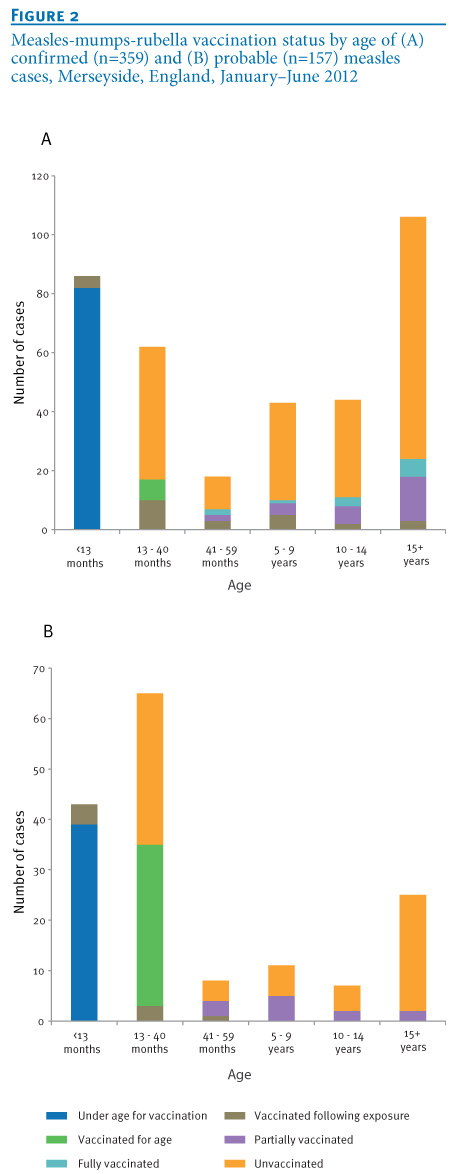
it is another bad year for measles - following on the European measles record year 2011, which saw, from January to October, 26'000 cases, with 9 deaths and nearly 7300 hospitalisation, measles are still going strong in UK. Various regions are reporting outbreaks, Wales saw over 100 cases in Gwynedd and Porthmadog. Sussex has seen just over 300 cases of measles this year. The area worst hit is Merseyside, a small county in England's North West, with a population just under 1.4 million. After a single measles case was seen in January, case numbers slowly increased to nearly 360 confirmed and over 150 suspected cases by the end of June. Luckily, there has not been a death so far, but 18% of the confirmed cases had to be hospitalised. Contrary to rumours circulating on the internet, the outbreak was not mostly in fully vaccinated children (it is interesting how pertussis and measles myths and facts mix and make for new vaccine-sceptical tales). The HPA team have now published the break down of measles numbers in this outbreak and of the proportion of vaccinated and unvaccinated patients. Indeed, only 12 of the 359 confirmed cases (3.3%) have had two MMRs*. The associated figure is very telling:

Take a good look at this. All orange and dark blue are unvaccinated, all green and purple are just vaccinated once (the UK recommends the first MMR at 13 months, the second at 41, so all green children were vaccinated age-appropriately only once). Only the light blue had 2x MMR. You may have to search for that stripe a bit, it is quite small. This is particularly interesting, since Merseyside has quite a high vaccine uptake, with 96% of children in Liverpool having had their first MMR. Consequently, the characteristics of this outbreak are very different from one in a largely unvaccinated population (like for example the 2008 outbreak in Salzburg, where 202 cases occurred in a month, largely in a 300 pupil Steiner school with 20% vaccine coverage), propagation of the measles is slow, with cases infecting very few other people. While it is a bit discouraging that the high vaccination coverage amongst young children has not stopped the outbreak entirely, it is clear what can be done.

Coverage for the second MMR needs to be increased. Older pupils, students and adults should check their vaccination records to ensure that they really have had two MMRs, children older than 13 and younger than 41 months could get their second MMR early during an outbreak to reduce the risk.

Consider getting your infant (between 6 and 12 months) vaccinated, if s/he is at "higher risk" (daycare) and there is an outbreak in the area - almost a quarter of cases in this outbreak were in the under one-year-olds, who are at particularly high risk of complications.
Anyone who intends to work/volunteer in the medical sector should have had two MMRs. In this, as in nearly every recent outbreak, transmissions within the medical setting and to medical personnel occurred.

Doctors and nurses need to familiarise themselves with the symptoms of measles, so that they can diagnose them early and limit transmission in the medical setting.

And finally, all parents need to think long and hard before taking their child into A&E or their GP's practice whether their child could be contagious, especially if the child has not had their MMRs and could be carrying a potentially fatal disease. Call ahead, get an "out of hours" appointment or home visit, if at all possible.


* Footnote: instead of complaining about vague language in HPA reports and speculating about the number of fully vaccinated children in this outbreak, people could have just emailed/called the HPA. They do have a presence on Facebook, too and are quite happy to answer any question in depth (I have talked to them through FB, email and phone).

Friday, August 3, 2012

100% certainty

Very few things are 100% certain in life and as a biomedical researcher, I am used to expressing things cautiously using phrases like "is consistent with", "there is no evidence for". However, of late, I have seen a claim that I can say with 100% certainty is not true.

My DS/DD caught pertussis from the vaccine (and iterations thereof, like "from the vaccine that a vaccinated child shed").

Not true. How do I know that?

Pertussis is a bacterial infection. Whole, living bacteria called Bordetella pertussis enter our nose/mouth because someone coughed them at us and they stick to the tiny little hairs (cilia) in our respiratory tract - here is a picture (source):


The bacteria have some proteins on the surface that help them hold on to those hairs and manipulate the immune response. In order to have a noticeable effect, the bacteria have to multiply, using loads of genes and proteins within their cell membrane (see below) and the nutrients provided by our body. Here is a picture of the bacteria (coloured from an electron micrograph in which they are 40.000x enlarged - source):


So why can't the vaccine cause pertussis? Because there are no bacteria in it. The vaccine only contains the surface bits that help the bacteria attach to those ciliated cells in your respiratory tract. For example, Daptacel contains:

10 µg detoxified pertussis toxin (PTx), 5 µg filamentous hemagglutinin (FHA), 3 µg pertactin (PRN), and 5 µg fimbriae types 2 and 3 (FIM) - I have circled them in red in the following picture (source):


The idea is that in response to vaccination, the body generates antibodies only against those proteins - those will bind to the surface of the bacteria when someone coughs at you and prevent the bacteria from sticking to your respiratory tract. Everything that is not circled in red is NOT in the vaccine. There is no chance that some surface bits injected into your arm or leg cause an illness that requires loads of bacteria sticking to those tiny cilia in your respiratory tract. Furthermore, the vaccine also does not contain the tracheal cytotoxin, which the bacteria release and which paralyses those cilia and prevent them from clearing your airways, which is what causes the characteristic cough (<- click on that link - this is what pertussis sounds like).

100%


Tuesday, July 31, 2012

August is National Immunization Awareness Month

The title says it all, tomorrow, National Immunization Awareness Month starts and Just the Vax will support vaccination awareness by blogging daily on vaccine related issues. Since a daily blog is about 30x the frequency of our usual activity, some posts might just be a "read this today" reference to other people's blogs. So let's warm up with this post by Orac over at Respectful Insolence, who today exposes Joe Mercola's typical anti-vaccine cherry picking and distortion of data:

Joe Mercola attacks vaccinations again. Film at 11.

and as a reminder why immunization awareness is really important - pertussis soars in the UK with 5 dead babies this year to date:

Whooping cough outbreak spreads to very young babies


Tuesday, June 5, 2012

Measles go to University

As British kids, not vaccinated in the 90ies due to the MMR media hysteria grow up, measles catches up with them - as seen yesterday:


Lovely Dr. S said that while he was happy to actually see a case of measles (young doctor in the post-vaccine era that he is), people would tend to forget that measles can be a very dangerous disease. And indeed, in Merseyside, where they have had over 200 cases of measles this year, 25% of over 15 year old patients (15 of 61) were hospitalised, the highest rate of all age groups (<1s: 24%, 1-5s: 20%, 5-9s: 4% 10-14s: 8%).

Apparently, University Health Service are also seeing lots of mumps and chicken pox, several cases of rubella and whooping cough. The nurse I saw was very impressed with the recent case of whooping cough - the first she had ever heard. She said she had heard a lot of coughs in her career, but the second she heard this one, she knew it as pertussis and "really something else" (in the sense of something much more severe that a normal cough). 

So here is a public service announcement to students in the UK and elsewhere where Universities may not check your vaccination record:

Make sure you are immune against measles, mumps, rubella, chicken pox, whooping cough and meningitis. 

If you don't have one of these, contact your GP, they should have your shots on file. It is your responsibility now.

You can still get the vaccines, if you didn't as a child. Talk to your GP - they'll be delighted to get you covered before you walk into their surgery with measles...

Wednesday, May 23, 2012

Measles in Europe: personal stories about coma, SSPE

Euronews has uploaded a video on measles in Europe, including the stories of Nastasia, a French teen who spent 12 days in a coma, needed 4 months of physiotherapy to learn to walk again and still suffers from a weak bladder, due to the muscle loss. Her mum believes in "building natural immunities" and in "treating with homeopathy". Max, a German boy, caught measles when he was 6 months old in his older sibling's kindergarten. SSPE caught up with him in 2006 - the family's life is centered around care for Max, who is a wake coma and needs round the clock care until he dies. Watch until the end... (and sorry for the annoying YouTube ad at the beginning)...


Saturday, November 26, 2011

Immunity

I came across this on Ratbags.com - a very short movie by Jasmine Marosvary - this made me think of Nelyn. I met his mum Lynne on ivillage some years ago. The first mother my age, who had lost a child to a vaccine preventable disease. Lynne was lobbying for the licensing of pertussis vaccine for adults, which has since happened. Vaccination saves lives:

Wednesday, August 24, 2011

Death isn't everything: part 2

Chloe Holmes lost most of her fingers as a toddler due to septicemia caused by chicken pox - she has now been fitted with a bionic hand:


contrast that with this: FB Group "Find a Pox Party in your area"

Sunday, June 12, 2011

oh look - vaccines resurrected on Ask Dr. Sears site

at least somewhat - as promised by Matt Sears to Seth Mnookin, "Vaccines" are back on the Ask Dr. Sears website:


The content is still a bit disappointing, cannot say the info is "updated". It consists of links to old "The Vaccine Book" (dead link) blog posts, mostly sans comments (big shame, since there were some beautiful ones in there by SM and me). This is not really suitable as an info site (yet) especially since posts don't have date stamps or corrections (no, the return of single measles, mumps and rubella vaccines is not planned for 2011, at least not according to Merck). The "purchase the vaccine book" link works (not surprisingly). I would advise against it.

Wednesday, June 8, 2011

Keeping Track of Your Child's Vaccinations

One of the topics that come up often on the boards is shoddy book-keeping of the doctor's office, posts like

"My child is two years old and I am sure we had done all first year vaccines, but now we got called back for XYZ shots"

"I got a letter from the State saying that my child is not up to date, but s/he is"

"my child got his/her 4th DTaP at 12 rather than at 15 months and now we have to go back for a 5th, because the 4th doesn't count" *

"my child got his/her MMR too early and now it doesn't count" *

All of these are real life examples (2 from Dr. Bob's old board, 1 from Babycenter) and they illustrate one thing very clearly:

You have to keep a record of the vaccines your child get!

Now in an ideal world, your pediatrician hands you a vaccination schedule on your first well visit, including all info on the first vaccines, so you can read up ahead of time. S/he'll discuss with you whether you have any questions before the first shots and each time your baby is vaccinated, the little sticker on the vaccine vial that has vaccine name and lot number goes into a booklet like this:


that you get to keep. I have encountered such "best practice" with our second child - our first had 3 cards, one for each country she got vaccinated in, until we combined them into one. It is surprising, however, how often parents do not automatically get vaccination records to take him with them.

However, you need such records, so if you move or change doctors, you have proof of which vaccinations your child has had. These "Yellow Cards" exist world wide (the upper picture is an Ugandan one filched off the web, my daughter has one from California, my son one from Germany), they have been around for a really really long time - I have one, my original one is white though and I recently found my mum's and grandma's (proper record keeping during WWI and WWII, although mainly for smallpox).

It is even more important to keep your records if you are on an "alternative" schedule (for any reason - the European schedule my daughter had been vaccinated on for her first 9 months was very much "alternative" to what was recommended/required in the US).

As soon as your child is born, you can make up a vaccination schedule for him/her - the CDC has a handy tool, or find your country's National schedule and do it by hand. If you want to diverge from what is recommended, highlight this on the schedule. Take the schedule in to your doctor's appointment to double check you have done it right. Ask for the yellow card and then keep track of all shots. Also make sure that all vaccines are actually available in the combination that you want to give them - there are still parents out there who want to give monovalent measles, mumps and rubella, but they are no longer made by Merck - there are also periodic shortages in vaccines (in recent years for example the monovalent hib).

It needs a little planning, but it is very valuable, and, ultimately, your responsibility.


* that is actually a topic for another post

Friday, June 3, 2011

Bob for hire...suggested topic "Vaccine Myths and Questions"

Hat tip to Liz Ditz, who found out that if you are on Dr. Bob withdrawals after his recent disappearance from the new Ask Dr. Sears website, you can still hire him to speak at your event (birthday party maybe?!):


The site advertises Dr. Bob Sears:

Acclaimed Pediatrician & Vaccine Expert
Once considered a routine and mandatory part of pediatric health care, vaccines are now constantly surrounded by debate and controversy. Parents are bombarded with well-intentioned medical advice from family, friends, advertisers, and even pediatricians who mean well but might be too busy to provide all the answers an anxious parent needs.

Dr. Robert Sears, M.D., F.A.A.P. one of the most trusted names in childcare today (1), provides clear, concise answers to the countless questions parents have about vaccines (2). He offers the most up to date information in the latest addition to the Sears Parenting Library, The Vaccine Book (3).

"Dr. Bob," as his young patients call him, has studied every article, vaccine product insert and case study available (4). Nine years spent in private practice have taught Dr. Bob what questions and concerns parents have, what aspects of vaccines they don't understand and which topics need more clarification - all so that he can sift through the noise to give parents the peace of mind they need when making sure their child is well cared for (5).

Dr. Bob does not tell parents which decision is right for them, he simply gives them the information and the tools they need to make the right decision for their particular child and situation (6).

Dr. Bob is a board-certified pediatrician in practice with his father, William Sears, M.D.. and the co-author of several books in the Sears Parenting Library (7). He lives in Dana Point, California.

At the podium, Dr. Bob discusses vaccine myths and questions, vaccine ingredients (which harmful ingredients are still in vaccines and what parents need to know to protect their children), and the current vaccination schedule. Dr. Bob presents his own alternate vaccination schedule that is more effective and less likely to create harmful side effects than the current one (8). (my footnotes)


(1) actually, I would doubt that - Sears maybe, but that is Sears the elder, or Sears the brand, not Bob.

(2) I wish I had saved more of his posts from his board. Dr. Bob often either didn't answer, or totally hand waved his replies. He often suggested that parents with children with ASD, AD(H)D, or sensory and/or speech issue not be vaccinated at all, without a clear rationale (gut feeling, extracted rectally?).

(3) The Vaccine Book appeared in 2007.

(4) I wonder why he would still make totally outlandish claims then. Recently, he told the mother of a 7 months old ex-preemie to rely on maternal immunity after measles exposure, which isn't really a testimony to his knowledge in the field.

(5) Except when they go abroad and bring back measles, that is...

(6) Yes, right, he instead pulled the "I tend not to vaccinate in this kind of situation, but of course it is totally your choice..."

(7) ...books which are no longer mentioned in his family's web shop.

(8) Bob's alternative schedule has never been tested for efficacy or safety. On his board, he appeared generally unaware of studies on alternative schedules (e.g. the Swedish schedule). His ideas on MMR efficacy were totally evidence-free.

"suggested topic" for a talk by Dr. Bob Sears is:

Vaccine Myths and Questions:
What's True, What's Hype, and What You Need to Know


I need a new irony meter...