Showing posts with label complications. Show all posts

Monday, March 17, 2014

Chicken pox? Chicken pox!

There are still parents who, although generally vaccinating, question the need for a chicken pox vaccine. They do think of chicken pox as a harmful rite of passage, a handful of pox, crusted over in a few days - about as "dramatic" as in this child:

Windpocken

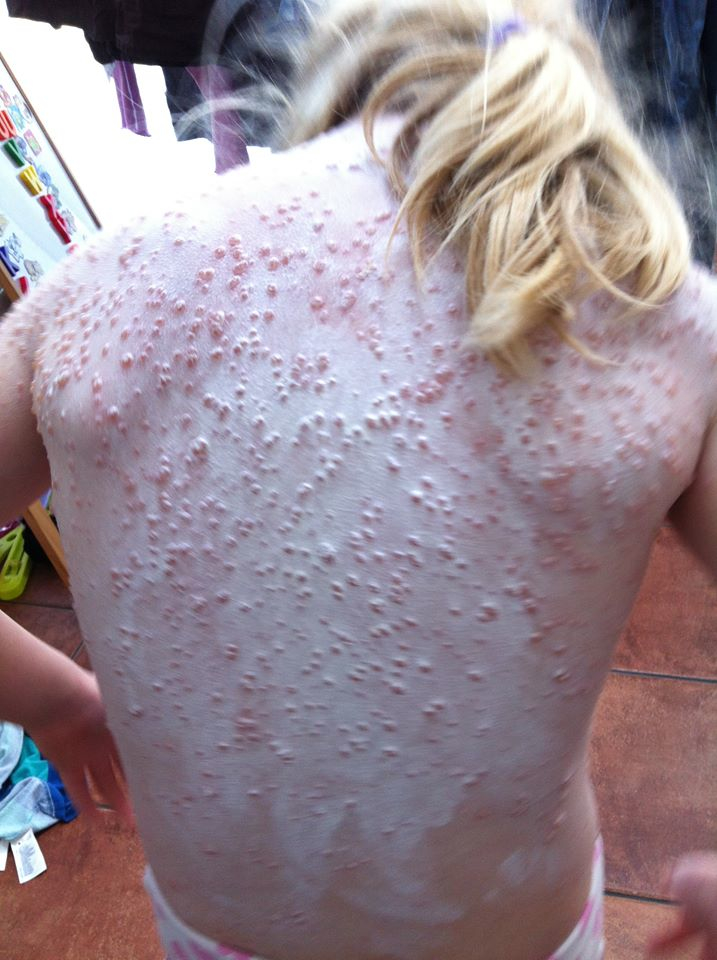
the benefit is assumed to be life long immunity (which it is, for about 90% of patients). Problem is - these are chicken pox, too:

 auchWindpocken

Hundreds of lesions, the entire back covered, incredibly painful, the infection so severe that the child had to be committed to the hospital, like 2000 of her peers in pre-vaccine Germany per year, on average for 5 days, 77% without pre-existing conditions. Chicken pox cases neurological complications (25.4% of hospitalisations), skin infections (23.2%) and gastrointestinal complications (15%), indeed, pox can be internal as well. About 20 per year died.

There is nothing to predict whether your child will be in the top group - "chicken pox? What's the fuss about?", or in the bottom group "chicken pox?! Looks like small pox to me!".  

That is why vaccination is worth it!
Tuesday, June 5, 2012

Meanwhile in London... (with update - day 6)

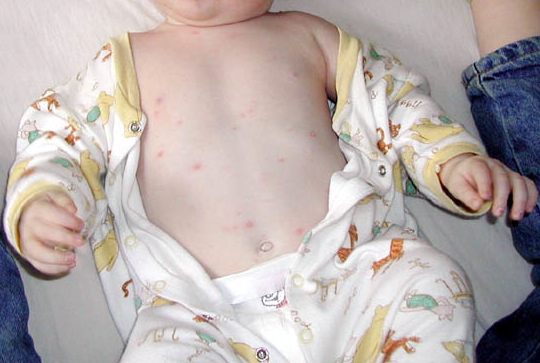
This boy is on day 3 of fever and chicken pox - new pox are still appearing (usually they do for 5 days after onset) - have a glimpse:


Mum had tried to get her two kids the varicella vaccine,  however,  the NHS does not offer varicella vaccine in their regular schedule. They say
"Chickenpox in children is considered a mild illness, but expect your child to feel pretty miserable and irritable while they have it."
No kidding: have another look at the boy's back - According to the NHS
"The chickenpox vaccine is not part of the UK childhood vaccination programme, because experts think that introducing a chickenpox vaccination for children could increase the risk of shingles in older people."
There are a number of papers, most of them from the same author, "independent computer scientist" Gary S. Goldman, violently arguing that the varicella vaccination programme has led to an increase in the prevalence of shingles, while not really protecting against chicken pox. However, actual data collected in various countries shows a different picture:
In Israel in a partially vaccinated population, shingles were associated with early (especially under the age of 1) infection with wild varicella and varicella vaccine was found to be protective. In Canada, shingles incidence in the vaccinated age group declined slightly, while it remained the same for older age groups. In Taiwan, the incidence of shingles started increasing before the varicella vaccine was introduced. The same was observed in the United States. In Australia, a slight increase on shingles rate occurred over the past 14 years, although this is not as ambiguous as the drop in varicella cases in the same time period, concomitant with the introduction of the varicella vaccine (see box 1 here). And finally, comparing countries with and without general varicella vaccine recommendations showed that shingles incidence seems to be independent of any vaccination programmes.

UK analyses come to the conclusion that a general vaccination programme for varicella may not be cost effective in the first 30 to 50 years after introduction. However, as the picture above impressively demonstrates and systematic studies also show, the impact of varicella on children and cost to carers is not necessarily captured by data available through health service usage.

The positive effect of varicella vaccination on pediatric health is undebated: between the introduction of the varicella vaccine in the US in 1995 and 2006, disease incidence fell by 57% to 90%, hospitalizations by 75% to 88%, deaths by >74%, and direct inpatient and outpatient medical expenditures by 74%. Varicella vaccination reduced the risk of pediatric stroke, a known complication of chicken pox also in the UK, by over 60% (similar observations were made in Italy).

What can I say? Have another look at that photograph - if you are in a country with a varicella vaccination programme, go get the vaccine. If you are in the UK, consider going private for the varicella - it is not fair that you have to pay out of pocket for a vaccination that will ultimately not only benefit your child's health, but also the NHS and your employer, but I would still consider this a good investment. If you are in the UK and you have gotten the varicella vaccine privately, please leave a comment and tell us where and how much it was as a resource for other parents.

ETA (6/6/12): this is day 6 - the young man (6 years old, no history of eczema or any other "condition") is feeling much better, the back is starting to crust over - take a look:

Wednesday, May 23, 2012

Measles in Europe: personal stories about coma, SSPE

Euronews has uploaded a video on measles in Europe, including the stories of Nastasia, a French teen who spent 12 days in a coma, needed 4 months of physiotherapy to learn to walk again and still suffers from a weak bladder, due to the muscle loss. Her mum believes in "building natural immunities" and in "treating with homeopathy". Max, a German boy, caught measles when he was 6 months old in his older sibling's kindergarten. SSPE caught up with him in 2006 - the family's life is centered around care for Max, who is a wake coma and needs round the clock care until he dies. Watch until the end... (and sorry for the annoying YouTube ad at the beginning)...


Monday, November 7, 2011

And another SSPE case: Angelina is dying

I had seen girl previously on a board, but the parents had not gone public until now, after Natalie's death.

Angelina caught measles in 2006 from an adult, when she was 7 months old. She recovered well - this is her before SSPE broke out:


This is her now:


Gina, Angelina's mum says (my translation):

"In February of this year, we noticed pronounced problems with our daughter. She kept falling off her bike, and had speech blockades. When this was getting worse, we went to the clinic. The diagnosis SSPE was a shock for us. Our child became dependent on care within 8 weeks. She cannot walk nor speak and needs to be tube fed. She would have entered school this year. This blow of fate is very hard for us all."


According to Sean Monks, spokesperson of the German Association of Pediatricians, this is the third case of SSPE from measles infection in infants in 2006 - in 2006 a total of 313 infants with measles were reported to the RKI (German CDC equivalent) in Berlin. One of these children died in 2007, another has been suffering from SSPE since 2009, and now Angelina is the third victim from that year.

Importantly, this shows that the risk of SSPE is much higher than previously thought. Overall risk for SSPE had recently been adjusted to about 1 in 11'000 notified cases of all ages, and "at least" 1 in 2'000 for infants (German pdf). From 2005 to 2010, 27 patients died of SSPE in Germany, although measles incidence had been sinking to reported numbers under 2000/year for some time. The current cluster of SSPE cases indicates that the risk of SSPE for infants who contract measles lies closer to 1 in 200.

Research has not yet identified the causative mutation for SSPE (see for example here) nor found strains with a particularly high risk of causing SSPE which could explain this high incidence. What is clear is that all cases in which measles virus has been amplified from the brain of SSPE victims, it was the wild type rather than the vaccine virus, and that with increasing vaccination coverage, SSPE incidence sank (see for example here and here, for review here).

The only way to prevent more SSPE cases is to vaccinate your child against measles (2xMMR) and to check your own immunity if you are unsure of your history of measles/measles vaccination. Your immunity protects those too young or too sick to be vaccinated. Your decision not to vaccine could cost lives, not necessarily yours.

Wednesday, August 24, 2011

Death isn't everything: part 2

Chloe Holmes lost most of her fingers as a toddler due to septicemia caused by chicken pox - she has now been fitted with a bionic hand:


contrast that with this: FB Group "Find a Pox Party in your area"