Showing posts with label varicella. Show all posts

Monday, March 17, 2014

Chicken pox? Chicken pox!

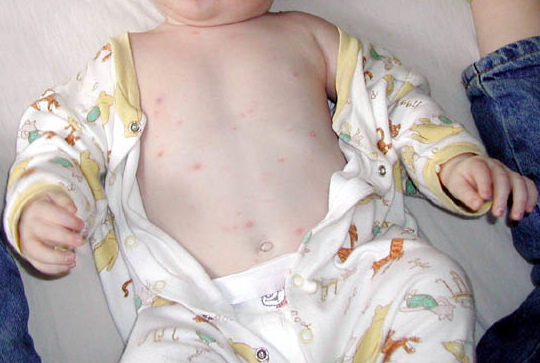
There are still parents who, although generally vaccinating, question the need for a chicken pox vaccine. They do think of chicken pox as a harmful rite of passage, a handful of pox, crusted over in a few days - about as "dramatic" as in this child:

Windpocken

the benefit is assumed to be life long immunity (which it is, for about 90% of patients). Problem is - these are chicken pox, too:

 auchWindpocken

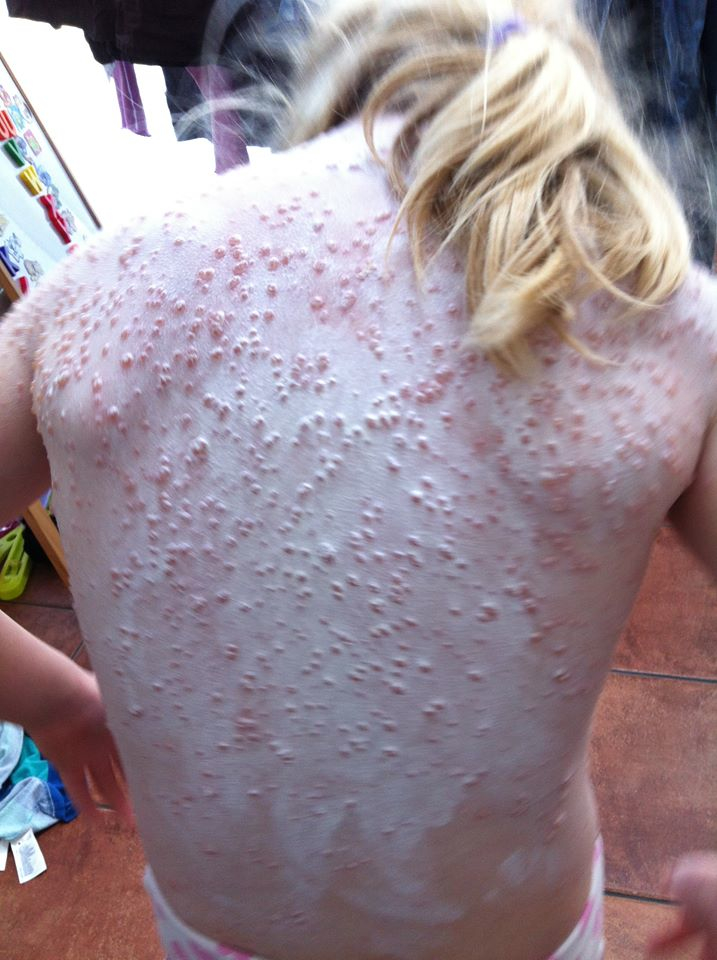
Hundreds of lesions, the entire back covered, incredibly painful, the infection so severe that the child had to be committed to the hospital, like 2000 of her peers in pre-vaccine Germany per year, on average for 5 days, 77% without pre-existing conditions. Chicken pox cases neurological complications (25.4% of hospitalisations), skin infections (23.2%) and gastrointestinal complications (15%), indeed, pox can be internal as well. About 20 per year died.

There is nothing to predict whether your child will be in the top group - "chicken pox? What's the fuss about?", or in the bottom group "chicken pox?! Looks like small pox to me!".  

That is why vaccination is worth it!
Thursday, September 13, 2012

Chicken pox vaccination policy in the UK - did it cost Elana's life?

The UK is often cited in discussions about the chicken pox vaccine. After all, they are a perfectly developed country, they even speak (vaguely) the same language as the US and the NHS's chicken pox policy spells out what (US) vaccine critics have known all along: the disease is harmless in children and vaccinating against it will increase the incidence of shingles in the older population.
The chickenpox vaccine is not part of the UK childhood vaccination programme, because experts think that introducing a chickenpox vaccination for children could increase the risk of shingles in older people. ...
Chickenpox is usually a mild illness, particularly in children. 
This view has been repeatedly challenged. The BBC claimed cost as one major reason the NHS doesn't provide the varicella vaccine and cited Dr David Elliman, immunisation expert at the the Royal College of Paediatrics and Child Health (RCPCH), stating that MMR fears need to be overcome in the UK before a further live viral vaccine could be successfully introduced (more suffering due to the Wakefield/MMR/autism manufactuversy):
"The chickenpox vaccine is definitely desirable, and I think it it will happen, but unfortunately I don't think we are ready for the debate yet - not until we get MMR rates back where they need to be. We need to win that one first."
This is particularly cynical since more patients are dying of chicken pox in England and Wales every year than from pertussis, mumps, measles and hib combined.
Mortality from chickenpox is not negligible. During
1995/­7, 81 deaths were recorded by the Office for
National Statistics. However, we received 119 certifi-­
cates that mentioned chickenpox or varicella. After
detailed inquiries, we estimated that at least 75 were
genuine cases of chickenpox. This suggests at least 25
deaths from chickenpox annually. In 1996/­7 there were
seven certified deaths from whooping cough, mumps,
measles, and Haemophilus influenzae type b (Hib) men-­
ingitis in England and Wales compared with 67 from
chickenpox.
In the meantime, children are either protected by a varicella vaccine purchased privately from a travel clinic (if parents are 1. aware of the option and 2. tenacious enough to find a clinic 3. well off enough to afford this), or they have to suffer through chicken pox. Elana had to have chicken pox and while her brother, who had them first, had a mild case, Elana developed pox in her lungs and died. Just like that:
Elana was three years old when she came out in spots on Easter Sunday 2009. She was fit and healthy and, as her brother had fended off a fairly mild dose of chickenpox the week before, I wasn’t worried. What was to follow has changed my family’s lives forever.
That evening, Elana was a bit tired and wanted to curl up in front of the television but she didn’t seem particularly ill – her spots were not even particularly itchy. But as the week progressed, she seemed to get more lethargic and her condition worsened.
By Thursday, the spots had started to crust over and I thought she should have been getting better but there was no improvement. On Friday night I called the emergency GP and went to a community health centre to have her looked at. The doctor diagnosed Elana with possible pneumonia and recommended that we take her straight to the hospital.
By 11pm on the Friday night we were in hospital and Elana was very unwell. At 6.04am on Saturday morning she suffered a cardiac arrest. Elana was pronounced dead at 7am.
The UK Department of Health touted the party line:
We wrote to the UK government but the Department of Health says severe cases of chickenpox infection are rare and occur mostly in immuno-compromised children. However, I can say from witnessing it first-hand that my daughter was fit and healthy before she picked up the virus. In fact, Elana only ever needed to see a doctor when she was having routine immunisations. I know some other parents who have had the same experience.  
Elana's mum is now spreading awareness of the potential dangers of chicken pox and the availability of the vaccine. It is striking that in the UK, the vaccine is such a well-kept secret that even she, as a nurse, was not aware of it. So: help her - don't let the death of her precious daughter have been wasted. Talk about the vaccine as a real option, tell your neighbours, your GP, your MP, post it on Mumsnet and other fora.

Tuesday, June 5, 2012

Meanwhile in London... (with update - day 6)

This boy is on day 3 of fever and chicken pox - new pox are still appearing (usually they do for 5 days after onset) - have a glimpse:


Mum had tried to get her two kids the varicella vaccine,  however,  the NHS does not offer varicella vaccine in their regular schedule. They say
"Chickenpox in children is considered a mild illness, but expect your child to feel pretty miserable and irritable while they have it."
No kidding: have another look at the boy's back - According to the NHS
"The chickenpox vaccine is not part of the UK childhood vaccination programme, because experts think that introducing a chickenpox vaccination for children could increase the risk of shingles in older people."
There are a number of papers, most of them from the same author, "independent computer scientist" Gary S. Goldman, violently arguing that the varicella vaccination programme has led to an increase in the prevalence of shingles, while not really protecting against chicken pox. However, actual data collected in various countries shows a different picture:
In Israel in a partially vaccinated population, shingles were associated with early (especially under the age of 1) infection with wild varicella and varicella vaccine was found to be protective. In Canada, shingles incidence in the vaccinated age group declined slightly, while it remained the same for older age groups. In Taiwan, the incidence of shingles started increasing before the varicella vaccine was introduced. The same was observed in the United States. In Australia, a slight increase on shingles rate occurred over the past 14 years, although this is not as ambiguous as the drop in varicella cases in the same time period, concomitant with the introduction of the varicella vaccine (see box 1 here). And finally, comparing countries with and without general varicella vaccine recommendations showed that shingles incidence seems to be independent of any vaccination programmes.

UK analyses come to the conclusion that a general vaccination programme for varicella may not be cost effective in the first 30 to 50 years after introduction. However, as the picture above impressively demonstrates and systematic studies also show, the impact of varicella on children and cost to carers is not necessarily captured by data available through health service usage.

The positive effect of varicella vaccination on pediatric health is undebated: between the introduction of the varicella vaccine in the US in 1995 and 2006, disease incidence fell by 57% to 90%, hospitalizations by 75% to 88%, deaths by >74%, and direct inpatient and outpatient medical expenditures by 74%. Varicella vaccination reduced the risk of pediatric stroke, a known complication of chicken pox also in the UK, by over 60% (similar observations were made in Italy).

What can I say? Have another look at that photograph - if you are in a country with a varicella vaccination programme, go get the vaccine. If you are in the UK, consider going private for the varicella - it is not fair that you have to pay out of pocket for a vaccination that will ultimately not only benefit your child's health, but also the NHS and your employer, but I would still consider this a good investment. If you are in the UK and you have gotten the varicella vaccine privately, please leave a comment and tell us where and how much it was as a resource for other parents.

ETA (6/6/12): this is day 6 - the young man (6 years old, no history of eczema or any other "condition") is feeling much better, the back is starting to crust over - take a look:

Measles go to University

As British kids, not vaccinated in the 90ies due to the MMR media hysteria grow up, measles catches up with them - as seen yesterday:


Lovely Dr. S said that while he was happy to actually see a case of measles (young doctor in the post-vaccine era that he is), people would tend to forget that measles can be a very dangerous disease. And indeed, in Merseyside, where they have had over 200 cases of measles this year, 25% of over 15 year old patients (15 of 61) were hospitalised, the highest rate of all age groups (<1s: 24%, 1-5s: 20%, 5-9s: 4% 10-14s: 8%).

Apparently, University Health Service are also seeing lots of mumps and chicken pox, several cases of rubella and whooping cough. The nurse I saw was very impressed with the recent case of whooping cough - the first she had ever heard. She said she had heard a lot of coughs in her career, but the second she heard this one, she knew it as pertussis and "really something else" (in the sense of something much more severe that a normal cough). 

So here is a public service announcement to students in the UK and elsewhere where Universities may not check your vaccination record:

Make sure you are immune against measles, mumps, rubella, chicken pox, whooping cough and meningitis. 

If you don't have one of these, contact your GP, they should have your shots on file. It is your responsibility now.

You can still get the vaccines, if you didn't as a child. Talk to your GP - they'll be delighted to get you covered before you walk into their surgery with measles...

Wednesday, August 24, 2011

Death isn't everything: part 2

Chloe Holmes lost most of her fingers as a toddler due to septicemia caused by chicken pox - she has now been fitted with a bionic hand:


contrast that with this: FB Group "Find a Pox Party in your area"